‘We had no warning’—NYC flash floods test our strained attention economy

‘We had no warning’ is one of the most worrying and upsetting things anyone in the weather field can hear in the aftermath of an impactful storm. The latest wave of flash flooding that swamped much of New York City brought up the endless argument between ‘we had no warning’ and ‘there was plenty of warning.’
The forecasts and warnings leading up to the storm were solid, with the risk for serious flash flooding in New York City appearing in forecasts well before the first downpours. But even so, the deluge seemed to arrive by surprise for countless folks across the city who voiced their displeasure over the apparent atmospheric broadside.
For years, folks in the weather field have personally shouldered the enormity of this problem. “It’s our fault if people aren’t getting the warnings,” the conventional wisdom goes.
I’m not convinced anymore that it’s entirely a problem on the communicators’ side.
An overlooked issue seems to be that weather is taking up less space than ever in the attention economy. Warnings seem to be falling through the cracks because more folks are simply tuning them out—and I’m not sure that’s something anyone can fix.
NYC encounters another historic downpour
New York City has suffered plenty of historic rainstorms in the past couple of years, but the deluge on on Friday, September 29, will go down in history as one of the city’s worst on record.
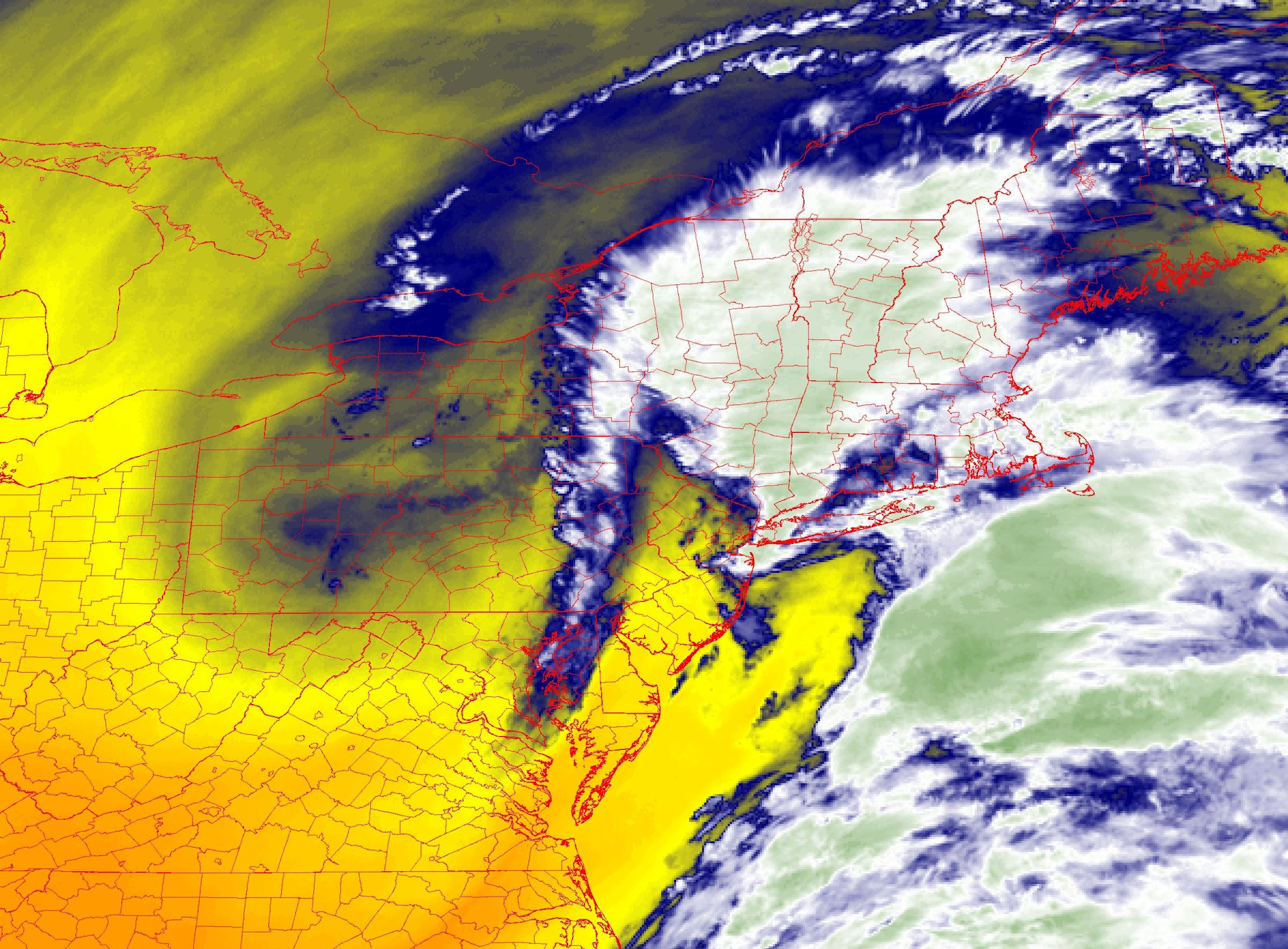
Much of the densely populated metro area saw 5-8+ inches of rain in short order between Thursday and Friday. The onslaught of water quickly overwhelmed the network of storm sewers that funnel runoff away from the concrete jungle. cascades of water pouring through the streets, into basements, and into the tunnels of the city’s vaunted subway network.
[Key Messages]: Heavy rainfall likely with potential of scattered to numerous areas of flash flooding late tonight into Fri night. Flood Watch is in effect for much of the area during this time. Closely monitor the forecast & prepare to take action if warnings are issued. pic.twitter.com/UhkzsIBgYB
— NWS New York NY (@NWSNewYorkNY) September 28, 2023
It was a well-predicted disaster. Meteorologists pointed out the potential for torrential rains several days in advance, and local forecasters communicated the risk or flash flooding long before the first rain started falling.
The Weather Prediction Center issued a moderate risk for flash flooding across the NYC metro area by the middle of Thursday afternoon, and flood watches and flash flood warnings were hoisted with plenty of lead time to reach people in harm’s way.
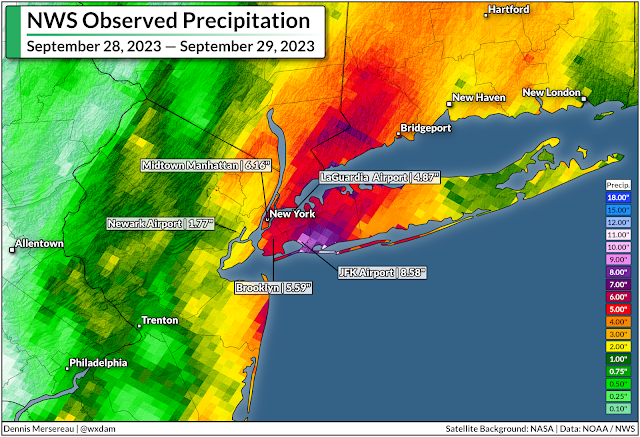
JFK Airport recorded a total of 8.58 inches of rain during the ordeal, 7.97 inches of which fell on September 29th alone, making for the airport’s wettest day since records began back in 1948.
Unfortunately, there’s a vast gulf between issuing great forecasts and those excellent lead times actually reaching people in harm’s way.
Warnings only matter if they’re heard
A quick scroll through social media shows how much folks in the region were taken by surprise once the waters started rising. ‘We had no warning’ was a common complaint, as was criticism of the city’s own preparation for the widespread flooding issues.
The uproar was amplified after New York’s mayor bluntly criticized his own critics in a radio interview, saying “if anyone was caught off guard, they had to be living under a rock.”
It’s admittedly tough for meteorologists to put out warning after warning—and for officials to put emergency preparations in place—only to catch flack after the storm from folks who never heard about the threat for imminent danger.
LISTEN: NYC Mayor Eric Adams says “if anyone was caught off guard, then they had to be living under a rock” in response to criticism about his office’s late response to the storm
He calls out “whoever has time to sit out and tweet” https://t.co/lz7yfL1dJT pic.twitter.com/eylqn8n2YF
— philip lewis (@Phil_Lewis_) September 29, 2023
After all, what good is a warning if the people who need it don’t hear it?
Meteorologists always strive to improve forecast and warning lead times, trying their best to communicate hazards as far in advance as science and confidence will allow. This week’s deluge likely would’ve taken folks by near-complete surprise not long ago.
Forecasters and news outlets always need to improve communication efforts. But it’s a tough process. Experimenting with language as simple as the difference between “warning” vs. “emergency” is a yearslong social science project. (Take a look at NWS HazSimp if you want an inside look at how tweaking basic terms is a major effort.)
But meteorologists and emergency managers and bloggers and politicians can only do so much. The best forecasts and loudest warnings are only good if they reach the people who need them.
Our attention is stretched dangerously thin
The concept of an “attention economy” is real. We only have so much attention to give, and every aspect of our lives is competing for a piece of that finite mental real estate.
Our forms of entertainment are much different today than they were just ten years ago. Emergency alerts on television and radio reach far fewer people now that the vast majority of folks use streaming apps for shows and music.
Apps make our phones chirp at us non-stop. It’s easy to miss a flash flood warning in between breaking news alerts, advertisements, friend requests, texts, emails, and endless push alerts from games and sports apps and shopping and on and on. That doesn’t even begin to cover wireless emergency alerts, which folks often disable after one too many ill-timed tests or Amber Alerts.
And then there are weather apps. We’ve all got apps on our phone that give us a high, a low, a chance of rain, and a cute icon with the day’s weather conditions. Unless you’ve got a really, really good app, though, you’re missing context. Words matter. Nuance is important. But they require more attention than a simple number or icon.
Most of those apps will tell you the chance of rain is 100%. For the most part, those same apps won’t fill you in on the potential for excessive rainfall that could lead to widespread street flooding. We’re giving up nuance in the never-ending quest to ration our well-worn attention.
So I’ll give you the answer that most meteorologists, emergency managers, news organizations, and responders either can’t or won’t give: Each of us is ultimately responsible for our own safety. Much as folks don’t want to admit it, a huge part of emergency preparedness falls on each one of us simply staying aware of what’s going on every day.
The potential for flooding in and around New York City was well-advertised well in advance. Flash flood warnings went out with plenty of lead time.
People who routinely follow the weather knew that the past 48 hours would be rough across the region.
People who don’t, largely didn’t.
Seeking out detailed weather information beyond a sleek icon and two numbers should be a normal part of everyone’s daily routine. The weather is fine most days. Some days, though, it’s not, and a few of those days will see dangerous conditions that could threaten your safety.
It can feel like a chore to have to read weather forecasts if you’re not already interested in the day-to-day happenings in our skies above. But for all the humdrum updates on clear skies or gusty winds, there will be days where tornadoes are possible or a hurricane is on an unsteady course or 8 inches of rain could fall on the streets of New York City.
It’s rare that a truly devastating weather event takes weather forecasters by surprise anymore.
It shouldn’t take the rest of us by surprise anymore, either.
[Satellite image via NOAA]