Intense tornadoes possible Monday as rare ‘high risk’ kicks off a week of severe storms


“Multiple intense, long-track tornadoes” are possible across parts of the
southern Plains on Monday as another major severe weather outbreak unfolds
across the center of the country.
southern Plains on Monday as another major severe weather outbreak unfolds
across the center of the country.
This is the opening act of another multi-day severe weather threat across the
country, the latest in
a weeks-long run of severe weather
that’s hammered the central U.S. over the past few weeks.
country, the latest in
a weeks-long run of severe weather
that’s hammered the central U.S. over the past few weeks.
Note:
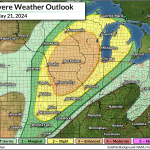
The outlook maps in this article were updated at 2:30 p.m. CDT Monday to reflect the SPC’s latest forecast.
The
Storm Prediction Center
(SPC) upgraded portions of Oklahoma and Kansas to a
rare high risk for severe weather,
the highest threat category that’s reserved for days capable of producing a
tornado outbreak. This is the first high risk issued by the SPC in more than a
year.
Storm Prediction Center
(SPC) upgraded portions of Oklahoma and Kansas to a
rare high risk for severe weather,
the highest threat category that’s reserved for days capable of producing a
tornado outbreak. This is the first high risk issued by the SPC in more than a
year.
All the dynamics are in place to support dangerous storms Monday afternoon and
into the nighttime hours. High instability and favorable wind shear will allow
any storms that form to quickly intensify and turn severe.
into the nighttime hours. High instability and favorable wind shear will allow
any storms that form to quickly intensify and turn severe.

Widespread storms are likely to develop from Nebraska through Oklahoma on
Monday afternoon. Storms farther to the north are likely to congeal into one
or more squall lines capable of producing damaging winds of 60+ mph, along
with a risk for embedded tornadoes.
Monday afternoon. Storms farther to the north are likely to congeal into one
or more squall lines capable of producing damaging winds of 60+ mph, along
with a risk for embedded tornadoes.
Farther south, though, storms are likely to develop as individual supercells
across southern Kansas and much of central Oklahoma. Forecasters are concerned
about the dynamics they see in this area, warranting the upgrade to a high
risk.
across southern Kansas and much of central Oklahoma. Forecasters are concerned
about the dynamics they see in this area, warranting the upgrade to a high
risk.
Any supercells that form in the region could be capable of supporting intense,
long-track tornadoes, as well as hail up to the size of softballs, and
destructive wind gusts of 75+ mph.
long-track tornadoes, as well as hail up to the size of softballs, and
destructive wind gusts of 75+ mph.
As the evening wears on, those supercells will likely merge into a squall line
and truck east after dark, posing a significant risk for damaging wind gusts
and embedded tornadoes across eastern sections of the risk areas. Nocturnal
severe thunderstorms are especially risky as folks tune out and head to
bed.
and truck east after dark, posing a significant risk for damaging wind gusts
and embedded tornadoes across eastern sections of the risk areas. Nocturnal
severe thunderstorms are especially risky as folks tune out and head to
bed.
|
| Image: SPC |
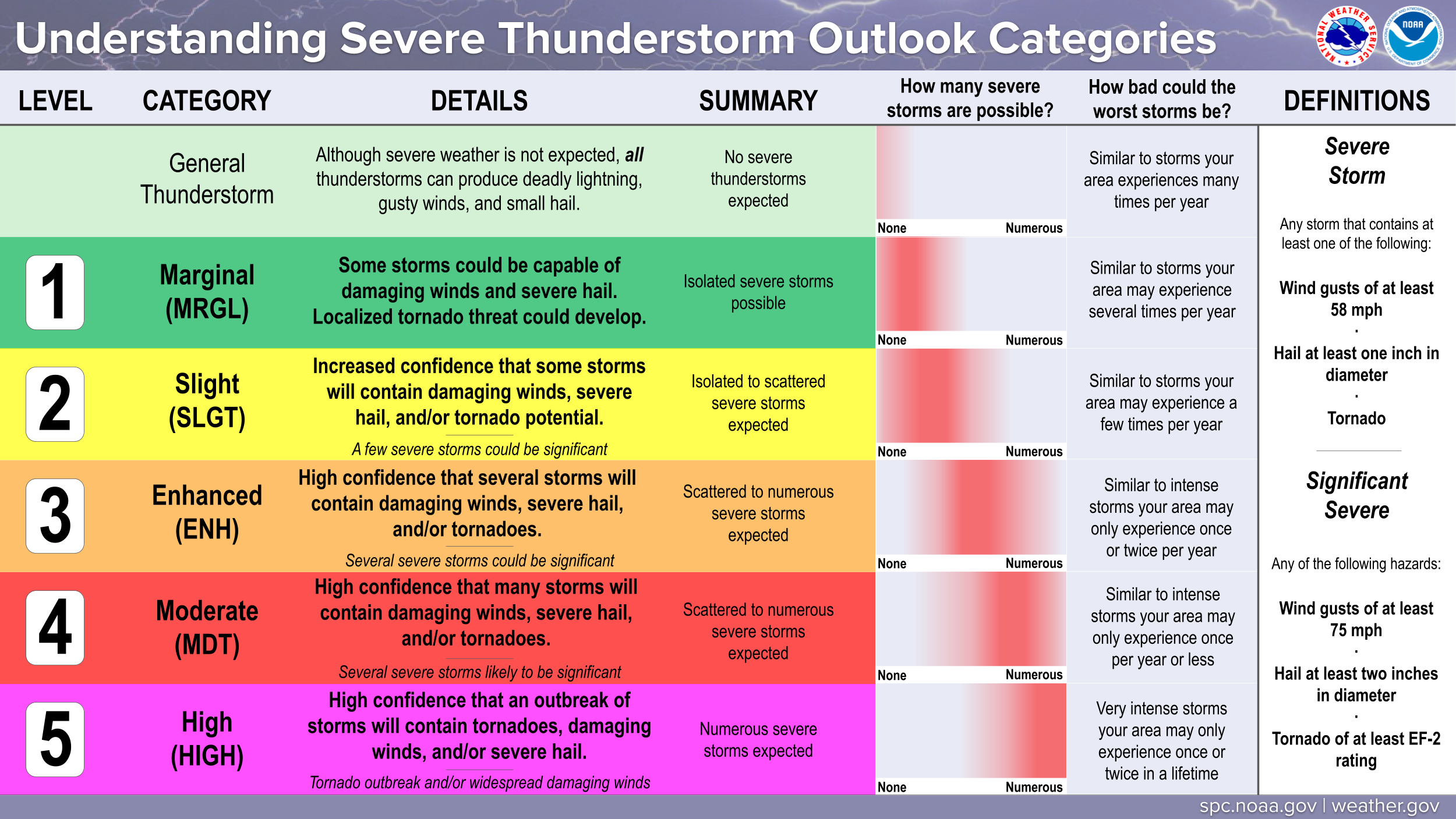
High risk days are rare and dangerous. Forecasters reserve this designation
for the most significant days that have the highest potential for storms that
could cause significant damage and loss of life.
for the most significant days that have the highest potential for storms that
could cause significant damage and loss of life.
It’s rare for all the ingredients to come together to create a high-end severe
weather outbreak.
Lots of points of failure are possible. Storms could struggle to form. We could see “messy” storm structures that
prevent them from fully engaging with the favorable environment. But the risk
is there—and it’s serious.
weather outbreak.
Lots of points of failure are possible. Storms could struggle to form. We could see “messy” storm structures that
prevent them from fully engaging with the favorable environment. But the risk
is there—and it’s serious.
Please take today seriously if you live in the area. If you know folks in the
area, make sure they’re aware of the risk on Monday.
area, make sure they’re aware of the risk on Monday.
Some Safety Tips
Be proactive. Don’t let storms take you by surprise. Keep an eye on the radar
and local news for live storm coverage, and stay aware of storms heading in
your direction.
and local news for live storm coverage, and stay aware of storms heading in
your direction.
Make sure you have a way to receive severe weather warnings the moment they’re
issued. Take a look at your phone and
ensure emergency alerts are turned on for tornado warnings. These free push alerts are proven lifesavers, and they only warn you if
your location is included in the warning so you know it’s nothing to
ignore.
issued. Take a look at your phone and
ensure emergency alerts are turned on for tornado warnings. These free push alerts are proven lifesavers, and they only warn you if
your location is included in the warning so you know it’s nothing to
ignore.
Do not rely on tornado sirens as your first line of defense. Tornado sirens
are not meant to be heard indoors. These systems are unreliable and prone to
failure.
are not meant to be heard indoors. These systems are unreliable and prone to
failure.
|
|
Image: NWS Mobile |
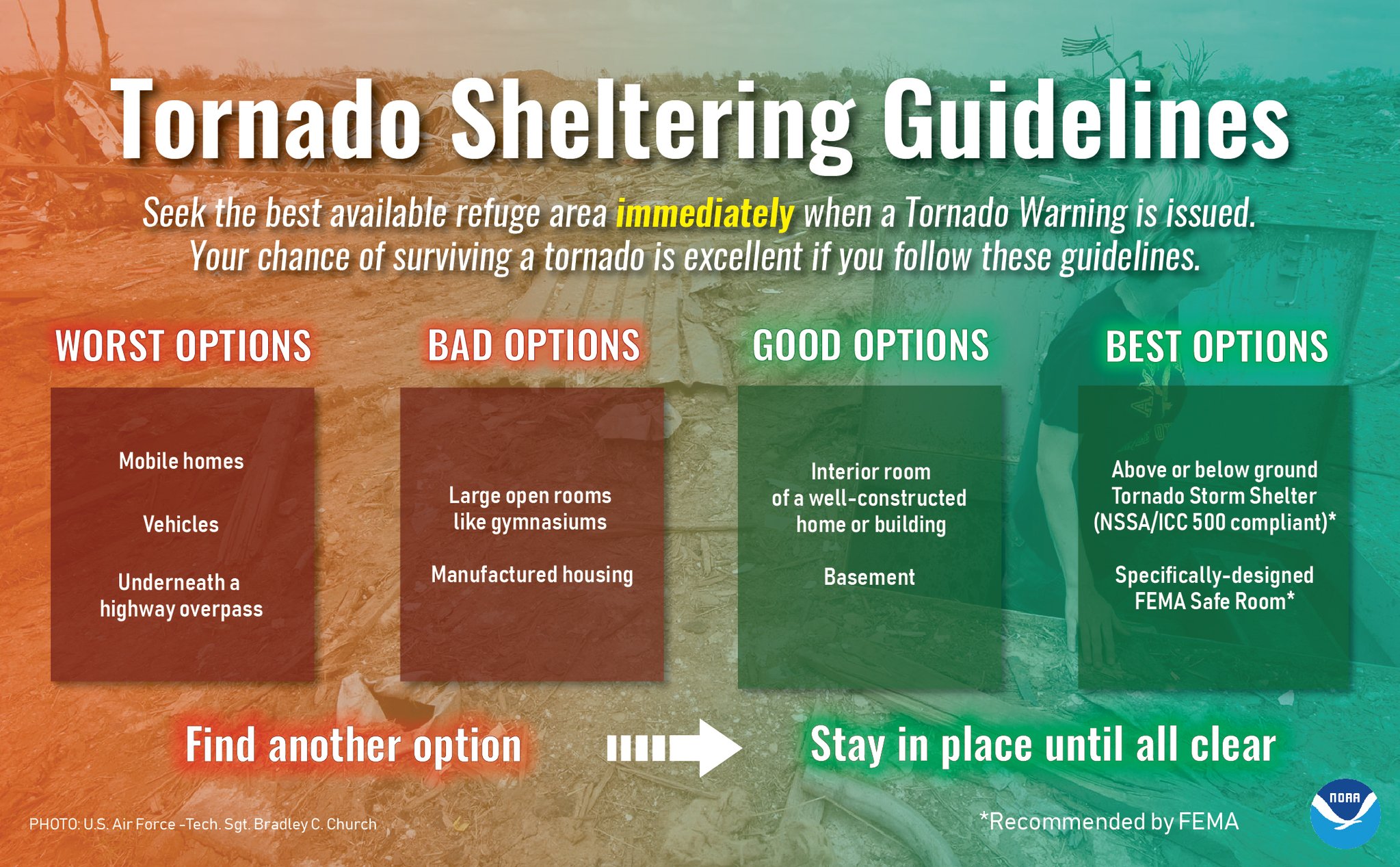
Form a plan in advance for where you’ll seek shelter if you’re under a tornado
warning. Stay on the lowest level of the building in an interior room, putting
as many floors and walls between you and flying debris as possible. Keep
blankets, pillows, and a bicycle helmet handy to wear while sheltering.
warning. Stay on the lowest level of the building in an interior room, putting
as many floors and walls between you and flying debris as possible. Keep
blankets, pillows, and a bicycle helmet handy to wear while sheltering.
Manufactured and mobile homes offer no protection from even the weakest
tornado. If you’re in one of these unsafe structures, have a secondary shelter
location in mind and go there before the storms arrive.
tornado. If you’re in one of these unsafe structures, have a secondary shelter
location in mind and go there before the storms arrive.
Wear closed-toe shoes today to protect your feet if you have to walk through
debris.
debris.
If you’re driving when a tornado warning is issued, do not stop under an
overpass. Bridges offer no protection from tornadic winds or flying
debris—they actually make the winds stronger. Stopping under a bridge to
shelter from a tornado or large hail often causes traffic jams that can lead
to serious car accidents or worse if a tornado hits that location.
overpass. Bridges offer no protection from tornadic winds or flying
debris—they actually make the winds stronger. Stopping under a bridge to
shelter from a tornado or large hail often causes traffic jams that can lead
to serious car accidents or worse if a tornado hits that location.
Tuesday’s Threat

Tuesday’s severe weather outlook begins at 7:00 a.m. EDT. This threat will
play out in two regions.
play out in two regions.
First, Monday’s severe weather will continue through the overnight hours as
the squall line pushes east into the Mississippi Valley through the pre-dawn
hours on Tuesday. This covers the risk near the Mississippi River.
the squall line pushes east into the Mississippi Valley through the pre-dawn
hours on Tuesday. This covers the risk near the Mississippi River.
Later in the day, a broken line of thunderstorms is likely to develop along
the cold front as it tracks east through the Midwest and Ohio Valley. The
strongest of these storms will be capable of producing damaging wind gusts and
a couple of isolated tornadoes.
the cold front as it tracks east through the Midwest and Ohio Valley. The
strongest of these storms will be capable of producing damaging wind gusts and
a couple of isolated tornadoes.
Wednesday’s Threat

A new low-pressure system will develop in Texas and quickly scoot toward the
Midwest by the middle of the week, leading to a renewed threat for widespread
severe thunderstorms on Wednesday.
Midwest by the middle of the week, leading to a renewed threat for widespread
severe thunderstorms on Wednesday.
This expansive risk stretches from central Texas to western Massachusetts,
with the bulk of the severe weather expected from the Dallas metro area up
through the heart of the Ohio Valley.
with the bulk of the severe weather expected from the Dallas metro area up
through the heart of the Ohio Valley.
Widespread damaging wind gusts of 75+ mph will be possible in and around the
enhanced risk area on Wednesday, along with a potential for a few strong
tornadoes. Scattered severe storms are possible for folks in the eastern
states, as well, with damaging winds possible in the stronger storms that
develop.
enhanced risk area on Wednesday, along with a potential for a few strong
tornadoes. Scattered severe storms are possible for folks in the eastern
states, as well, with damaging winds possible in the stronger storms that
develop.
Initial thunderstorms could start as supercells west of the Mississippi
early in the day Wednesday. The threat will likely evolve as multiple broken
squall lines through the day, with embedded supercells possible.
early in the day Wednesday. The threat will likely evolve as multiple broken
squall lines through the day, with embedded supercells possible.
Follow me on
Facebook
|
Bluesky
| Threads |
Instagram
| Twitter
|
Bluesky
| Threads |
Get in touch! Send me an
email.
Please consider
subscribing to my Patreon. Your support helps me write engaging, hype-free weather coverage—no
fretting over ad revenue, no chasing viral clicks. Just the weather.