Intense smoke expected for Midwest, East Coast after days of record heat

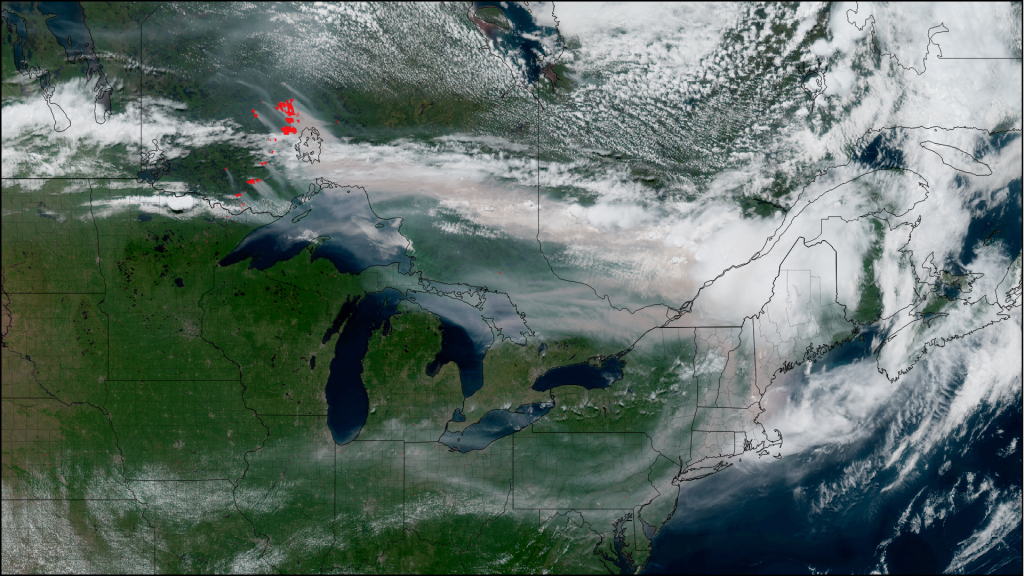
Thick smoke will blow across the Upper Midwest and East Coast in the days ahead as fires rage throughout Minnesota and Ontario after record heat stoked by this year’s third heat dome event.
Some models suggest that the smoke density and air quality could rival the unprecedented smoke event that spilled across parts of the East Coast in early June 2023.
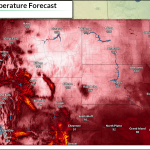
A powerful ridge of high pressure over the central U.S. has sent temperatures soaring to record heights over the past couple of days. Here’s a sampling of cities that have seen all-time record highs since the event started over the weekend:
- Billings, Montana: 111°F (prev: 108°F, records back to 1934)
- Salt Lake City, Utah: 109°F (prev: 107°F, records back to 1874)
- Sheridan, Wyoming: 109°F (prev: 107°F, records back to 1907)
- Several communities in northwest Ontario may have also set all-time records with readings as high as 105°F
Extreme heat and dry conditions often favor the ignition and rapid spread of wildfires, and that’s exactly what we’ve seen across some of the areas struck by very hot temperatures over the past few days.
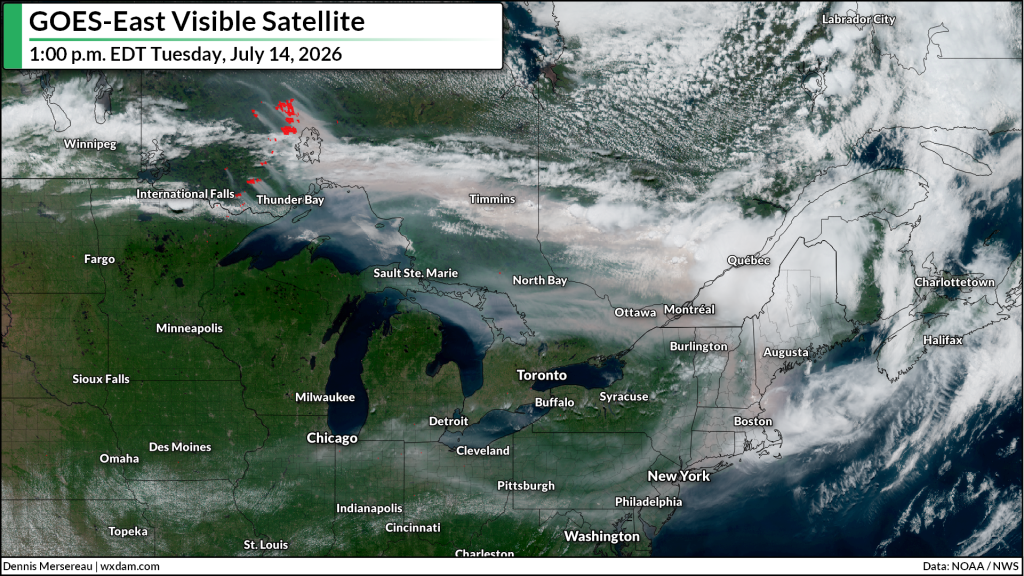
Significant and widespread wildfires raging in northern Ontario are a particular concern–not just for nearby communities, but for the prolific smoke they’re pushing downwind.
We’ve already seen thick smoke filter across sections of New England on Tuesday, with hazy skies as far south as New York and Washington. This coverage will increase in the days as the fires intensify and thicker plumes of smoke stream south of the border.
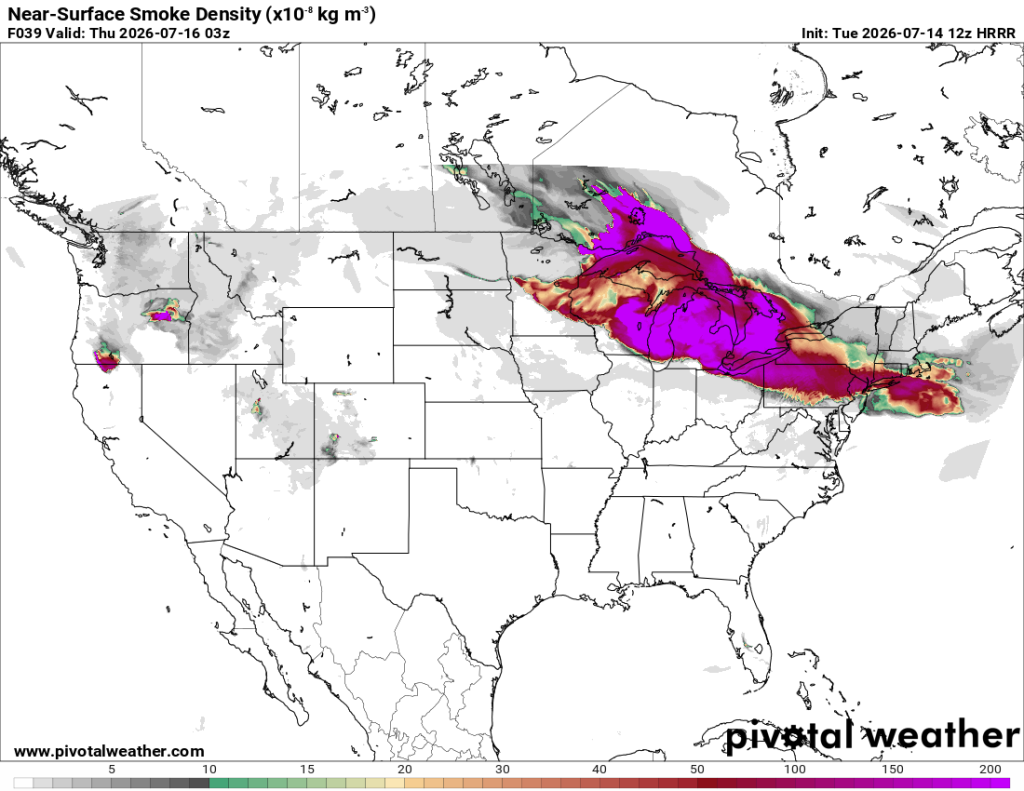
Some weather models, such as the HRRR, show near-surface smoke concentrations nearly topping off the legend from Wisconsin to upstate New York, with the heaviest concentrations choking Michigan and southern Ontario.
Depending on how much smoke actually mixes down to the ground, it’s possible that places like Detroit and Toronto may have the world’s worst air quality on Wednesday and Thursday. This would be extremely hazardous for folks with respiratory conditions like asthma or COPD.
We’ll also see some ancillary effects from the smoke, such as slightly lower daytime high temperatures, and possibly fewer thunderstorms due to a more stable atmosphere. Extremely vivid sunrises and sunsets are also likely as sunlight filters through the massive amount of fine particulate matter floating in the atmosphere.
Follow me on: Facebook | Bluesky | Instagram
Please consider subscribing to my Patreon. Your support helps me write engaging, hype-free weather coverage–no fretting over ad revenue, no chasing viral clicks. Just the weather.