Fake hurricanes, denied aid: This election is about reality versus conspiracy theories

%20white%20house.jpg)
How sad that someone at NOAA had to spend the time workshopping, writing, and
approving a statement assuring the public that
we can’t control the weather. How sad that the lie exists at all. How sad that people are so willing to
believe that lie. How sad that people in the highest reaches of power are
willing to fan the flames of that lie.
But that’s been our mantra for the past decade: How sad.
It’s now or never
and outright lies that used to fester on the sidelines are now
mainstream schools of thought among folks who are desperate to confirm their
beliefs and suspicions. This kind of frightening detachment from
reality has always been a nagging undertow running beneath society, but it’s
gotten so much worse over the past decade.
together as a country.
If you think things are bad now, it’s almost assuredly going to get worse if the nation’s foremost conspiracy theorist and unabashed liar is elected to sit behind the Resolute Desk again.
Endless lies
It’s not a partisan statement to call Donald Trump a conspiracy theorist
and unabashed liar. He’s proven time and time again that he’s more than
willing and handily able to create his own reality when the real world
doesn’t suit his needs.
Let’s leave aside Trump’s 34 felony convictions and attempted
coup d’etat—and just stick to the weather.
The former
president’s tenuous grip on reality is exemplified by his
fraught relationship with the field of meteorology.
His very first lie upon entering office on January 20, 2017,
involved the new president telling a group of supporters that it didn’t
rain on his inauguration—even though
video clearly showed
it raining about one minute into his address. It’s the avalanche of little
lies that pave the way for the big lies.
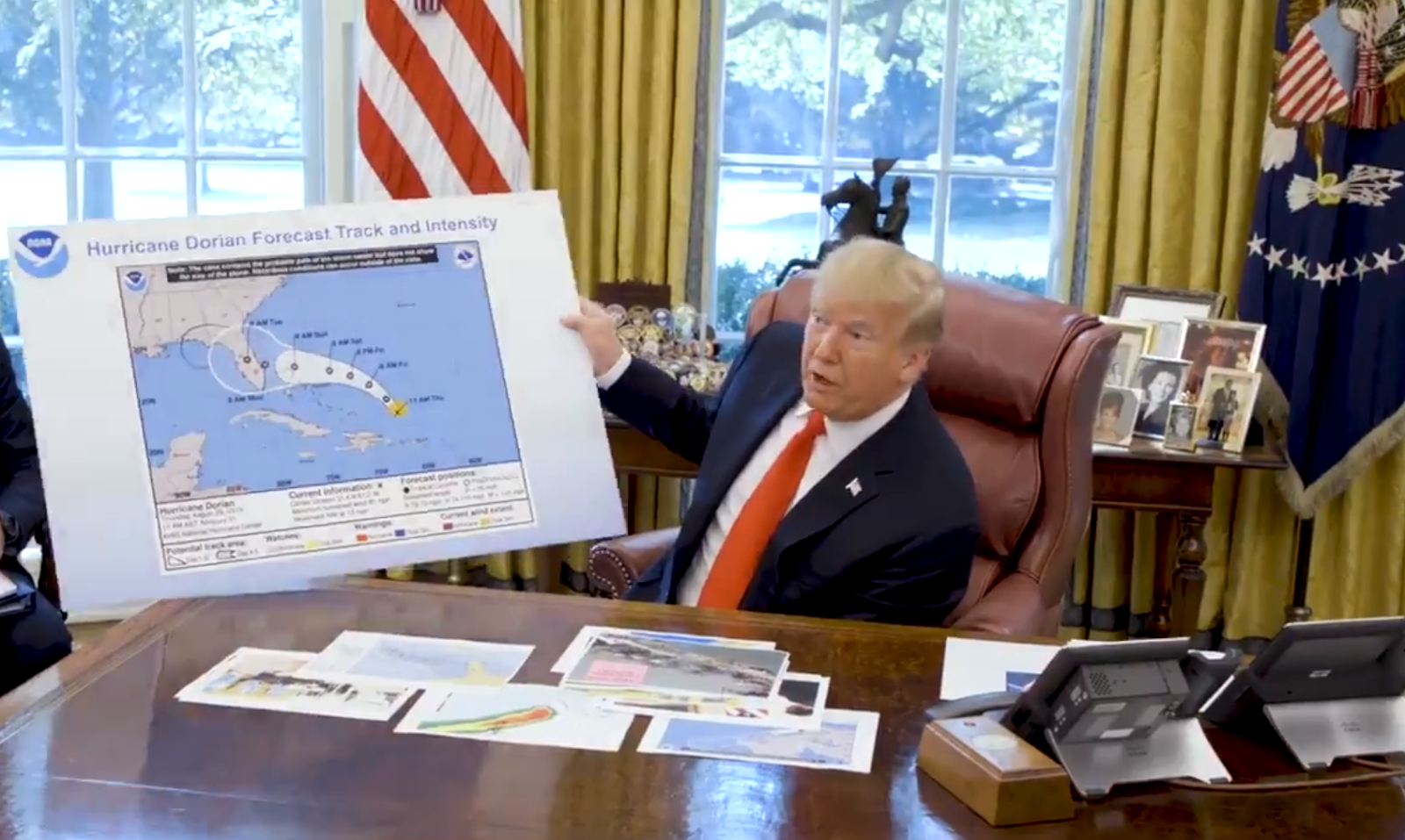 |
| Trump drew on a NHC forecast map to extend the cone to Alabama on Sept. 1, 2019 |
Alabama that Hurricane Dorian would be “much worse than anticipated,” then
used a Sharpie to alter a National Hurricane Center forecast map
rather than admit he was wrong. The fracas ended with the White House
threatening to fire NOAA’s leadership if they didn’t participate in the
ensuing coverup.
He proposed slashing more than $75,000,000
from the National Weather Service’s budget in 2020, which would have fired 250 meteorologists,
curtailed critical surface and upper-air weather observations, and ended a
valuable research project to study tornadoes in the southeastern U.S.
He
issued a controversial pardon while Category 4 Hurricane Harvey made
landfall in Texas because he “assumed ratings would be far higher” while people were already watching the news.
He delayed
meaningful aid to Puerto Rico in the wake of Hurricane Maria by
conditioning billions of dollars in disaster aid
on political goals like prohibiting the island from raising the minimum
wage, and implied that further aid to the island was contingent upon the
territory’s political leadership
showing “appreciation” for him.
He opposed sending federal aid to California during the
state’s deadly 2018 wildfire season because it’s a heavily
Democratic state. He reportedly only agreed to send aid after finding out
he won the counties affected by the wildfires.
And those are just the lowlights of his four-year term.
Lies are a group effort
One of his biggest
supporters in Congress—who once questioned if California’s wildfires were
started by
Jewish-controlled space lasers—accused an unnamed “they” of
controlling the weather
in the wake of Hurricane Helene.
 |
| Hurricane Milton on October 7, 2024 |
A high-stakes outcome
The real world is scary enough without making stuff up
security blankets for adults
frightened by a rapidly changing and interconnected world in which bad things sometimes
happen. It’s scary and upsetting that tornadoes and hurricanes and wildfires can wipe away entire communities in moments.
happen because bad people are making them happen. If bad things aren’t
random—if bad things are controlled by bad people—then we might have a
chance to stop those tornadoes from forming, to stop that hurricane from
hitting land, and to keep those wildfires from charring everything we’ve known
and loved.
Unfortunately,
a growing percentage of the American public has fallen so detached from
reality that they’re unwilling or completely unable to believe that the
real world doesn’t work that way. They’re more eager to believe that their
perceived enemies control hurricanes than they are to accept basic
elementary school meteorology.