The 2026 Atlantic hurricane season begins


The 2026 Atlantic hurricane season officially began on Monday, kicking off the six-month period of the year most favorable to the development of tropical storms and hurricanes.
Seasonal Outlooks
Forecasters with both NOAA and Colorado State University expect below-normal tropical activity across the Atlantic this year, largely due to a potentially strong El Niño developing over in the Pacific.

This pattern of warmer ocean waters in the Pacific tends to create wind shear that can disrupt Atlantic tropical disturbances before they can thrive.
Despite predictions of below-normal activity, there’s some uncertainty surrounding the forecast due to warmer-than-normal Atlantic waters and other factors that may prove favorable for several tropical systems to sneak through the overall pattern.
Of course, it only takes one storm making landfall to make this a bad year.
Storm Names

Last used in 2020, this year’s list of Atlantic hurricane names begins with Arthur and runs through Wilfred. The roster features Leah for the first time as a substitute for Laura after its retirement due to the storm that devastated southwestern Louisiana in August 2020.
Seasonal Progression
A typical hurricane season follows a familiar pattern.
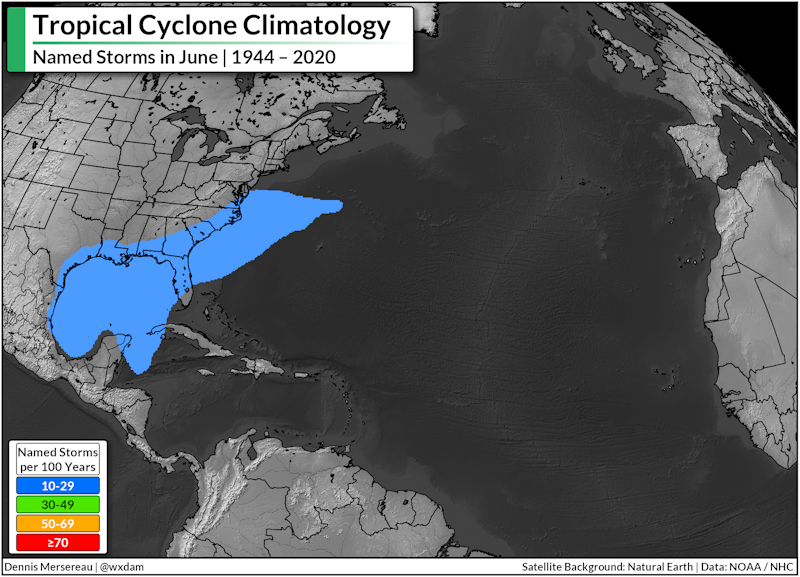
Early-season storms tend form close to North America and the Caribbean, often the product of decaying fronts and thunderstorm complexes.
We start to see activity take root farther out in the tropical Atlantic as the season progresses. Disturbances rolling off the western shores of Africa often seed the development of our classic peak-season storms.
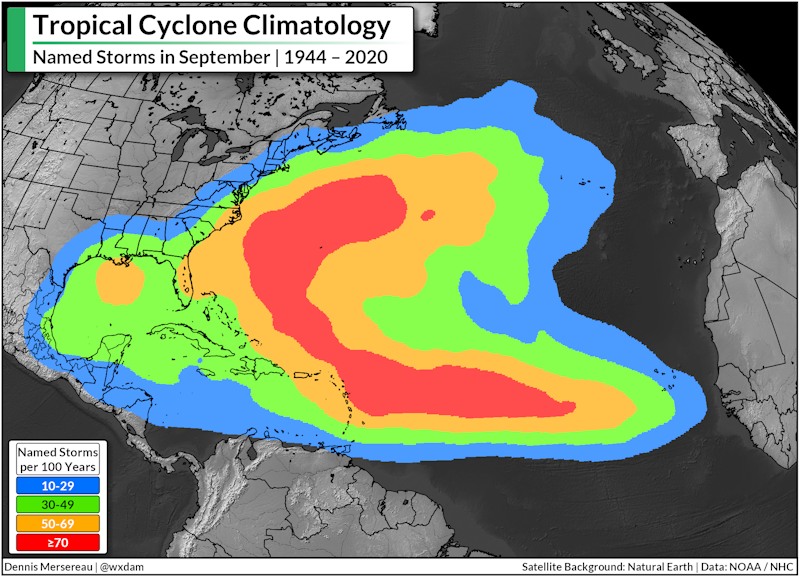
The height of the hurricane season arrives from mid-August through mid-September, historically peaking around September 10th. This is when conditions are most favorable for at least one storm lurking on the horizon.
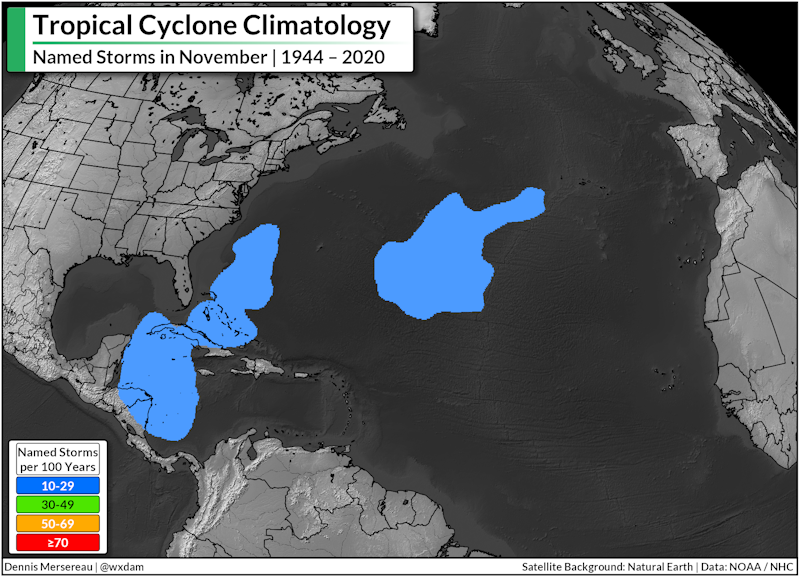
As we see early in the season, late-forming storms in October and November usually develop closer to land. These systems can be deceptively strong, and their proximity to land makes them especially dangerous given the reduced lead time before they make landfall.
The season officially ends on November 30th, but it’s not unheard of to see activity persist beyond that arbitrary ending date.
Follow me on Facebook | Bluesky | Instagram
Get in touch! Send me an email.
Please consider subscribing to my Patreon. Your support helps me write engaging, hype-free weather coverage—no fretting over ad revenue, no chasing viral clicks. Just the weather.