Illinois hit hard as U.S. nears 900 tornadoes so far in 2026

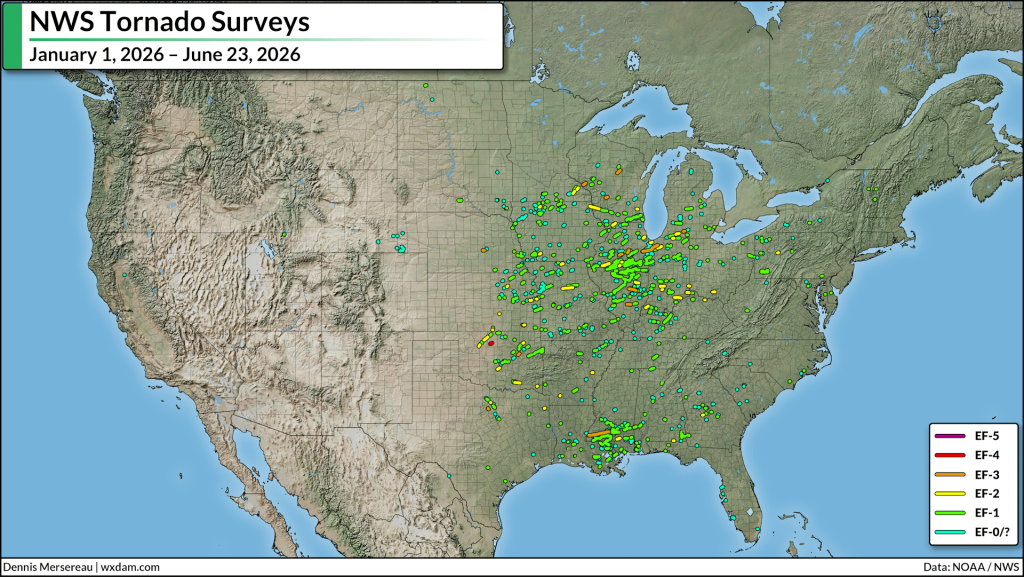
Illinois is taking the brunt of this year’s unusual tornado activity across the United States as the national count nears 900.
Data updated daily by the National Weather Service shows a rough count of about 877 confirmed tornadoes across the contiguous United States since the beginning of the year.
Here’s the breakdown:
- EF-5: 0
- EF-4: 1
- EF-3: 14
- EF-2: 47
- EF-1: 411
- EF-0: 302
- EF-U: 76
- TOTAL: 877
EF-U(nknown) is used as a default for confirmed tornadoes that haven’t been rated yet, as well as confirmed tornadoes that didn’t cause any known damage. It’s likely that several of these tornadoes are double-counted as a result of storms crossing boundary lines between NWS offices.
Storm reports collected by the Storm Prediction Center show that the country as a whole is running just slightly ahead of normal in the tornado count by this point in the year. Tornado reports are different from confirmed tornadoes; multiple reports can come in for one tornado, and some reports don’t result in a confirmation.
These storm reports reveal that Illinois leads the country with a whopping 200 reported tornadoes since Jan. 1. This is more than double Mississippi’s preliminary count, which currently holds second place with at 83.
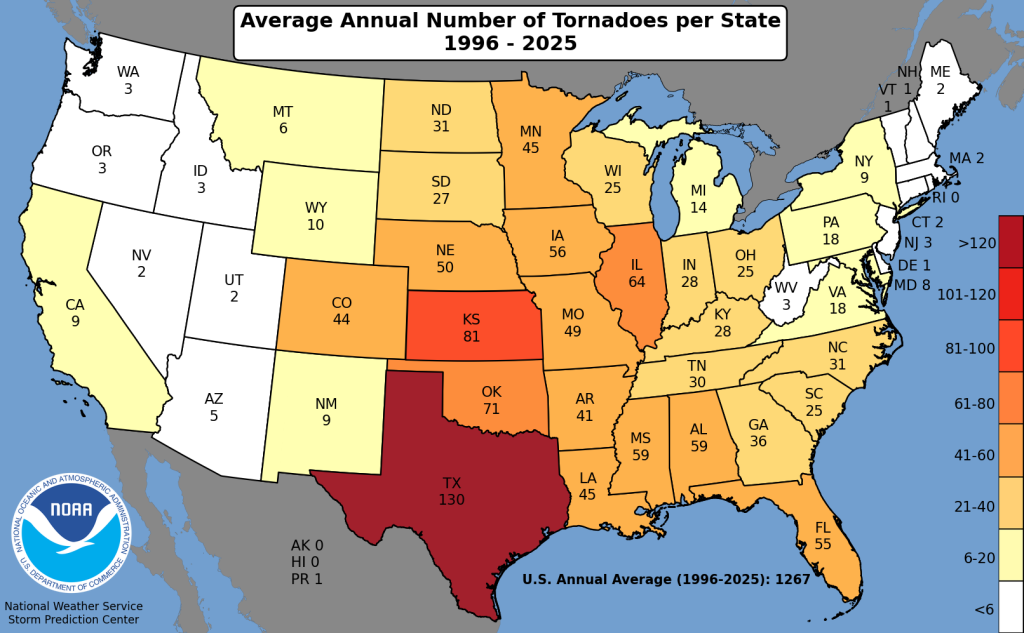
Illinois is no stranger to tornadoes. The state averaged 65 tornadoes per year between 1996 and 2025, making it #4 in the nation behind Texas, Kansas, and Oklahoma.
But climbing well into the triple digits is a significant feat even for this tornado-prone part of the Midwest. Why so many tornadoes?
The upper-level pattern over the past couple of months has favored a storm track that’s repeatedly drawn low-pressure systems toward the Great Lakes region. It’s a track that’s put Illinois on the southern side of these systems, which is the optimal location for severe thunderstorms capable of producing tornadoes.
Historically, tornado activity tends to lift toward the northern Plains and Canada as we head deeper into the summer months. But a continued troughing pattern over the center of the country could bring additional rounds of severe weather to areas already hit hard over the past couple of months.
Follow me on: Facebook | Bluesky | Instagram
Please consider subscribing to my Patreon. Your support helps me write engaging, hype-free weather coverage–no fretting over ad revenue, no chasing viral clicks. Just the weather.