Here’s What You Need To Know About The Impending Peak Of Hurricane Season


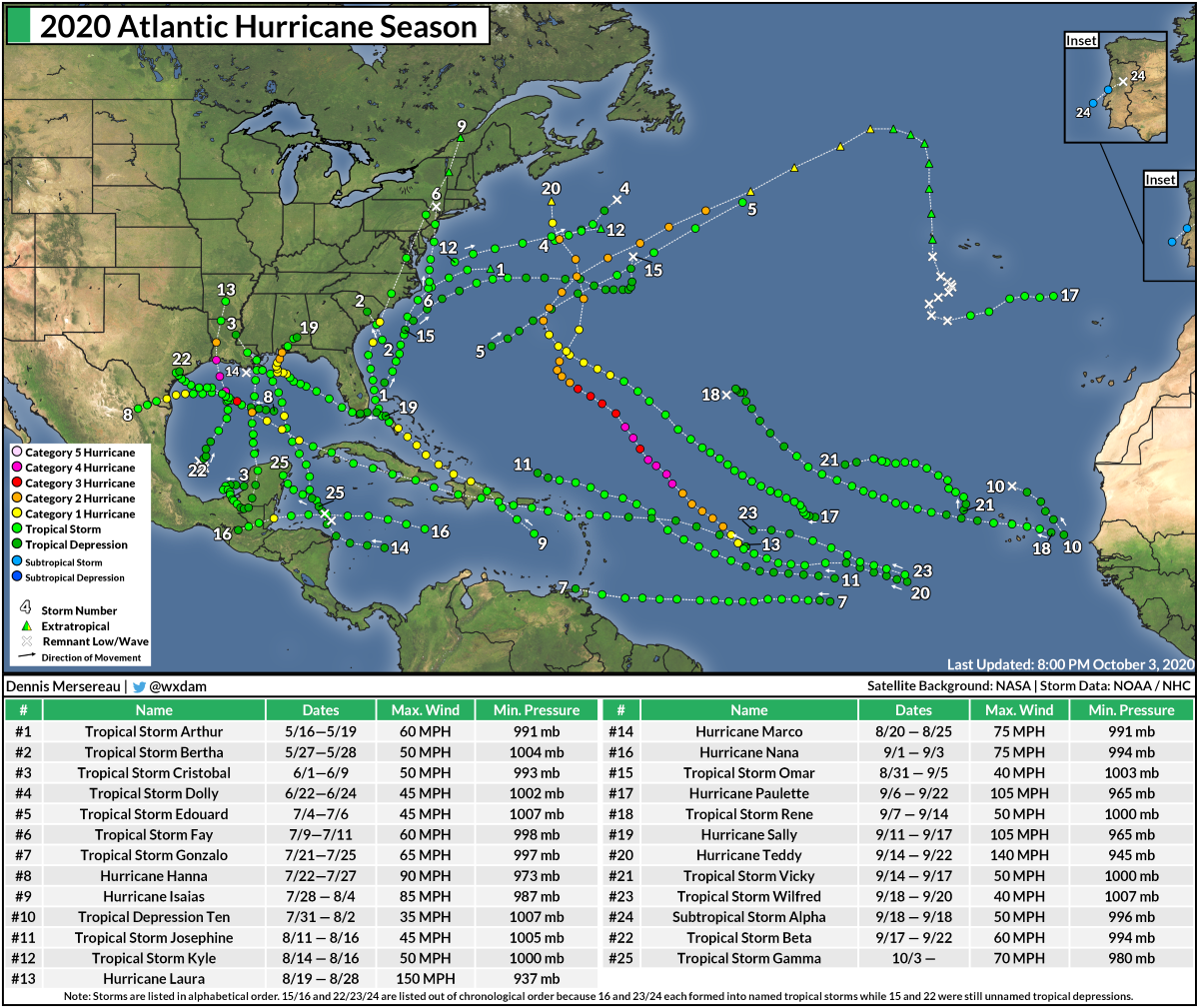
1) What We’ve Seen
2) What’s Could Come Next
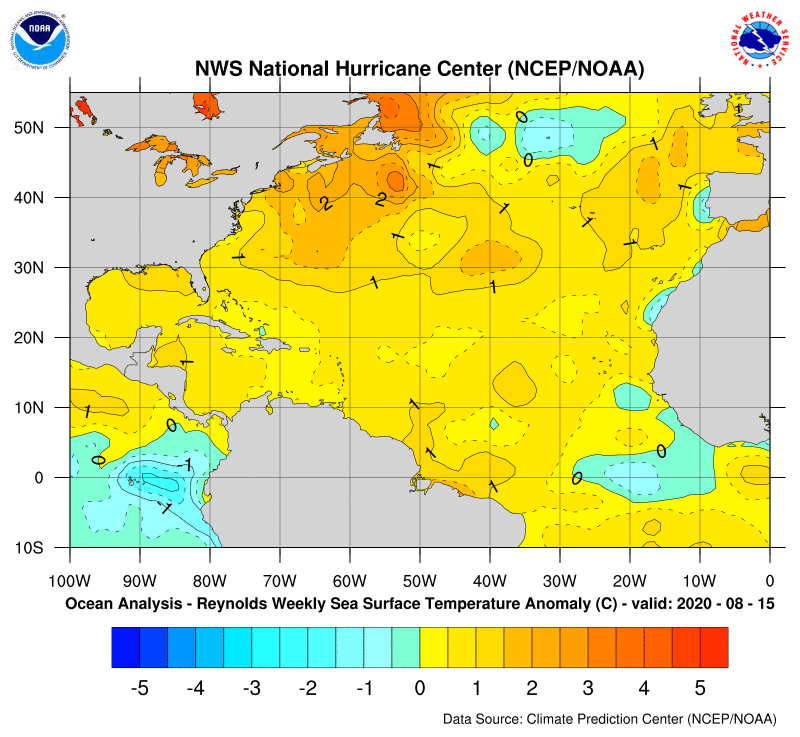 |
| Sea surface temperature anomalies (°C) during the week of August 15, 2020. Source: NHC |
3) We Might Run Out Of Names
4) A Small Chance Doesn’t Mean No Chance
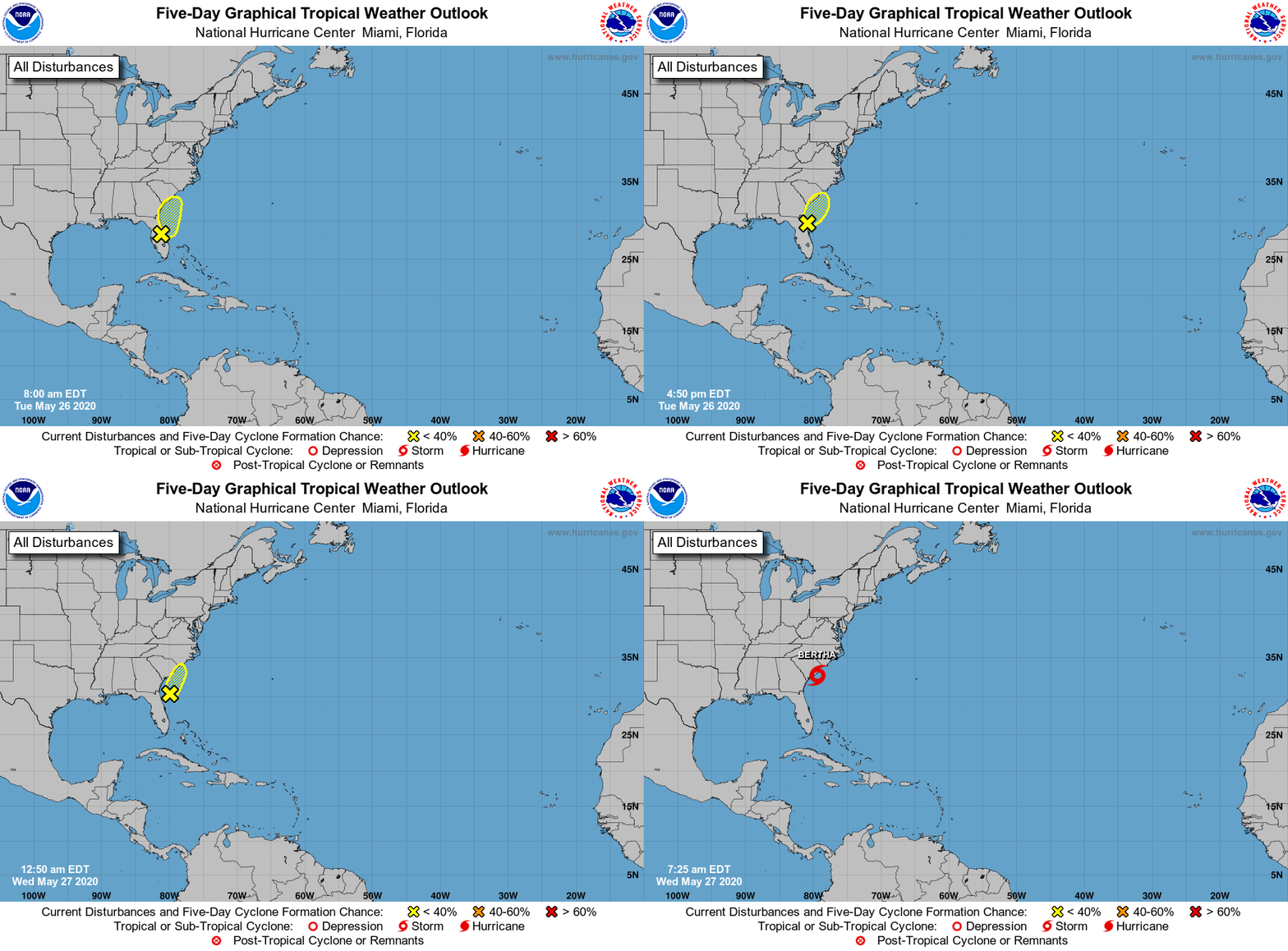
Not much changed impacts-wise once the disturbance organized into a tropical storm. The system was destined to bring plenty of rain and gusty winds to the Carolinas regardless of its development.
If there’s a disturbance or a storm approaching land, it’s important to pay attention and check in with the latest forecasts and warnings every couple of hours. Weather forecasting is still an inexact science, and storms can still catch us off guard.
5) We’re Exceptionally Vulnerable This Year
We’re in the midst of an uncontrolled pandemic and a tinderbox political environment. This summer more than any, the United States is uniquely vulnerable to significant disruptions as a result of a landfalling tropical system.
Coastal communities are doing their best (we hope, anyways) to figure out how to work evacuation shelters and emergency response plans with the coronavirus in mind. The very last thing we need during a landfalling hurricane is a coronavirus outbreak among people who are displaced from their homes, which would not only put enormous stress on the people who can’t go home (or have no home left to go back to), but it would also put unnecessary strain on local hospital systems that might be overwhelmed already.
6) Forecasts Are More Than Just A Map
There’s more than meets the eye in a hurricane forecast. The design of a hurricane forecast map is inherently misleading given the risks posed by these often-sprawling storms.
The Cone Of Uncertainty Isn’t Just For Show
The cone of uncertainty is the historical margin of error in a tropical system’s forecast path. Every year, meteorologists at the NHC verify their forecasts to see how far off their forecast points were from the actual location of the storm’s eye at each timestep in the forecast.
Historically, the center of a cyclone stays within the cone of uncertainty two-thirds of the time, venturing outside of the cone the other one-third of the time.
If you look at past forecasts compared to recent ones, you’ll notice that the cone is much smaller than it was just a couple of years ago, and it’s quite slim compared to 10 or 20 years ago.
The Cone Is Just For The Center Of The Storm
It’s important to remember that a hurricane forecast map entirely revolves around the center of the storm. Some hurricanes are 600 miles across, meaning the effects of their wind, rain, and storm surge will extend hundreds of miles from the center of the storm.
Rain, Rain, Rain
Much of the focus on a landfalling storm revolves around the wind and storm surge right at the coast, but as we’ve seen so many times in recent years, it’s the rain that can do the most damage over the widest area.
An unnamed tropical disturbance in 2016. Hurricane Harvey in 2017. Hurricane Florence in 2018. Tropical Storm Imelda in 2019. It seems like we have at least one of these horrendous flooding events every year, and the probability of these destructive inland flooding events will grow as a changing climate brings about more frequent and more prolific heavy rain events.
Track Is More Accurate Than Intensity
Hurricane forecasts have improved by leaps and bounds over the last couple of decades. Thanks to improved forecasting techniques and better modelling, hurricane track forecasts are much more accurate than they were just ten years ago.
7) Easily Overlooked Prep
We all know to stock up on food and water before a hurricane hits, but as we saw with the panic shopping at the beginning of the pandemic, we’re too settled into the mindset of preparing for all disasters like blizzards. Here’s what we should focus on heading into the peak of the season.
➤ Water: Bottled water is fine. Bottle-it-yourself water is better on your wallet and better for the environment. Remember to bottle enough for drinking and to use for flushing the toilet and washing your hands.
➤ Light: You need batteries and flashlights. F-L-A-S-H-L-I-G-H-T-S. Not your cell phone’s flashlight feature. An actual flashlight—many, if you can swing it—along with enough batteries for a few refills each. Trust me. Relying on your cell phone’s flashlight feature during a long power outage will just drain your cell phone and leave you without communication or light, and that’s no good.
Please consider subscribing to my Patreon. Your support helps me write engaging, hype-free weather coverage—no fretting over ad revenue, no chasing viral clicks. Just the weather.